Best Office Moving Equipment for a Safer Move
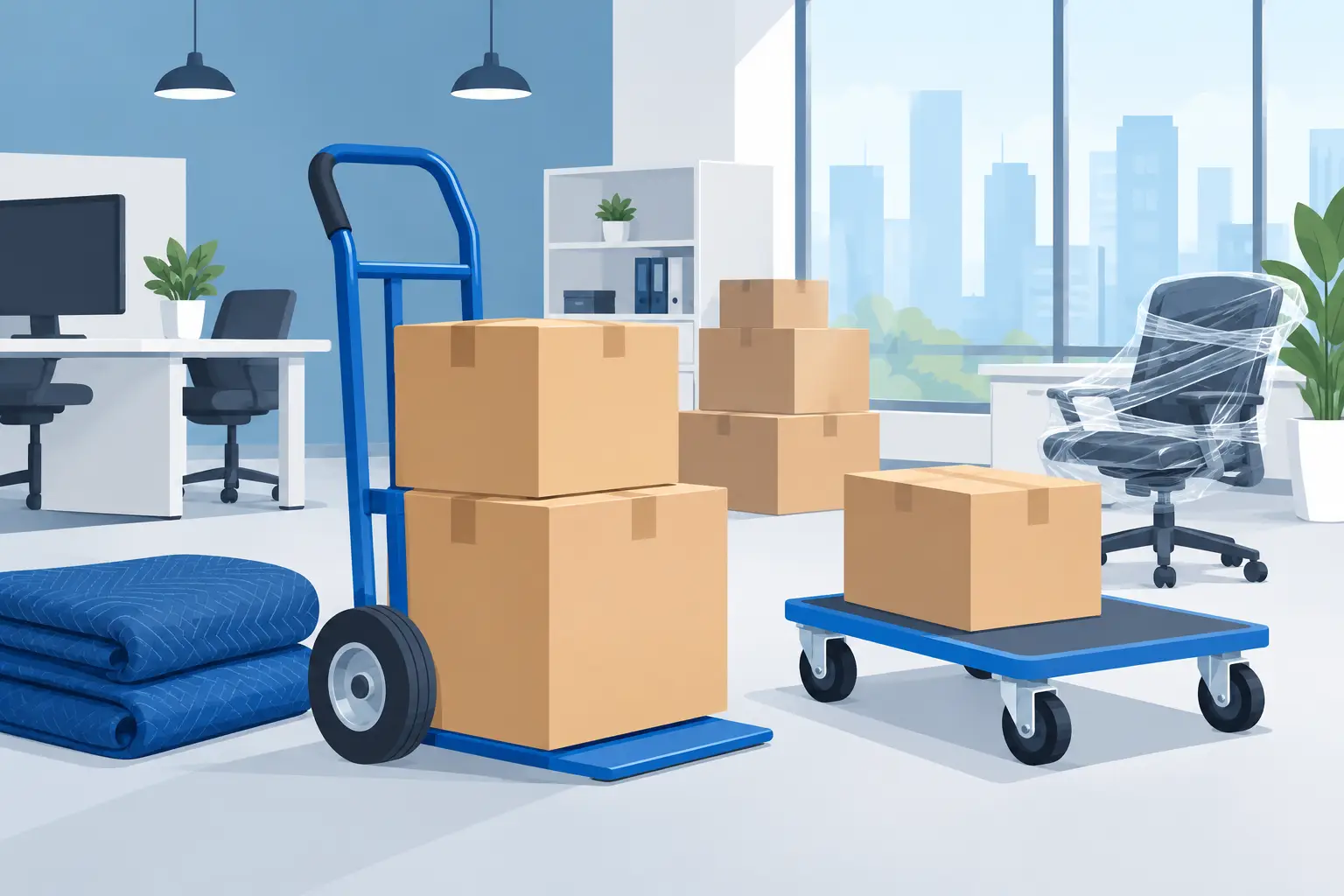
A business move can lose momentum fast when a loaded filing cabinet will not clear a doorway or an expensive monitor is packed in the wrong box. The best office moving equipment protects your people, furniture, technology, and schedule. It also helps reduce the costly delays that happen when employees are asked to move heavy items without the right tools.
For a small office, a few well-chosen pieces of equipment may be enough. For a larger corporate, medical, industrial, or multi-floor relocation, professional-grade moving tools and an experienced crew can make the difference between a controlled move and a long weekend of disruption.
Start With the Items Your Office Actually Has
There is no single equipment package that fits every business. A law office with rows of records has different needs than a technology company with workstations, servers, and large display screens. A warehouse office may include heavy shelving, while a medical practice may need careful handling for specialized equipment.
Walk the space before moving day and identify the items that create the most risk. Focus on large desks, conference tables, filing cabinets, cubicle systems, printers, safes, computers, monitors, and boxed records. Measure oversized pieces, doorways, elevators, loading areas, and the new office layout. Those details determine whether you need simple dollies, furniture disassembly tools, protective padding, or specialty equipment.
The goal is not to buy every tool available. It is to use the right equipment for the load, building access, and timeline.
The Best Office Moving Equipment for Heavy Furniture
Office furniture is often heavier and more awkward than it looks. Solid conference tables, executive desks, bookcases, lateral file cabinets, and reception counters can cause damage when they are dragged across floors or carried without proper support.
Four-wheel furniture dollies
A four-wheel furniture dolly is one of the most useful tools on a commercial move. Its flat platform supports wide, bulky pieces such as desks, cabinets, boxed equipment, and stacks of chairs. Use moving pads and stretch wrap to keep furniture stable and protect finished surfaces before loading it onto the dolly.
Furniture dollies work best on level floors and clear paths. They are not a substitute for proper lifting technique, especially around ramps, tight turns, or uneven pavement. A spotter should guide the load whenever visibility is blocked.
Appliance hand trucks and utility dollies
An upright hand truck is useful for printers, small filing cabinets, boxed electronics, and compact furniture. Appliance hand trucks with straps provide more control for heavier items. They can be especially helpful when moving through hallways or from a suite to a loading dock.
Keep in mind that a loaded hand truck changes the center of gravity. Heavy loads should be strapped securely, tilted carefully, and moved by trained workers. For stairs, elevators, or unusually heavy equipment, a professional moving team is the safer choice.
Furniture sliders and floor protection
Furniture sliders can help reposition desks and tables inside an office without gouging tile, hardwood, or carpet. They are useful for short movements, not for transporting furniture through a building. Masonite, carpet shields, and other floor-protection materials are equally valuable when crews will make repeated trips through finished spaces.
These simple supplies can prevent a move from turning into a repair bill. Protecting entryways, elevator floors, and common areas also helps your business maintain a good relationship with building management.
Equipment for Files, Records, and Office Contents
Paper may not be flashy, but it can be one of the heaviest parts of an office relocation. Records are dense, confidential, and difficult to replace. Standard moving boxes can work for lighter supplies, but file boxes and rolling library carts are often better for documents.
File carts allow hanging folders to remain organized during the move. They save packing time and make it easier to return records to the correct department at the new location. Lockable carts or sealed, labeled boxes are a better fit for confidential files, human resources paperwork, financial documents, or client records.
Use sturdy, uniform boxes for office supplies, books, and desk contents. Overfilled boxes are a common cause of torn cartons, back injuries, and dropped items. A good rule is to pack books and paper in smaller boxes, then use larger cartons for lightweight items such as cushions, lamps, and breakroom supplies.
Protecting Computers, Monitors, and IT Equipment
Technology deserves its own plan. Computers, monitors, networking equipment, phones, and cables are not just office contents – they are essential to getting your team back to work.
Anti-static bags, padded monitor cartons, computer crates, and foam inserts offer better protection than loose packing paper. Label each workstation by employee, department, and destination area. If possible, photograph cable connections before disconnecting equipment and keep cables with the matching device in labeled bags.
Server racks, large copiers, plotters, and specialty electronics may require manufacturer guidance or specialized handling. These items should not be treated like ordinary furniture. The cost of downtime, data loss, or a damaged machine can be far greater than the cost of arranging qualified movers and proper equipment.
Moving Pads, Stretch Wrap, and Straps Matter
The equipment that prevents scratches and shifting is just as important as the equipment that carries the load. Moving pads protect desks, wood trim, table edges, and metal frames from rubbing together in a truck. Stretch wrap keeps drawers closed, cushions padded surfaces, and secures wrapped components during transport.
Ratchet straps and tie-downs keep loaded furniture and equipment from moving inside the truck. They must be used carefully. Over-tightening can damage fragile furniture, while loose straps allow items to shift. A properly loaded truck places heavier items toward the front, distributes weight evenly, and uses padding between pieces.
For cubicles and modular furniture, labeled hardware bags are essential. Keep screws, brackets, keys, and small connectors with the correct workstation or panel system. Losing one small set of hardware can delay an entire reassembly crew.
When Specialty Equipment Is Worth It
Some office moves call for more than standard dollies and boxes. Safes, oversized printers, large conference tables, medical equipment, industrial components, and heavy storage systems may require lift-gate trucks, pallet jacks, skid boards, machinery dollies, or specialty rigging.
A pallet jack is useful for palletized supplies and warehouse inventory, but only when floors and loading docks allow safe operation. Lift-gate trucks are helpful when a location does not have a dock. For heavy items, the route matters as much as the equipment. Low overhead clearance, stairs, narrow doorways, soft ground, and steep ramps can change the plan quickly.
This is where trying to save money with improvised equipment can become expensive. Specialty items need a clear handling plan, enough trained labor, appropriate insurance, and equipment rated for the actual weight.
Best Office Moving Equipment Also Includes a Good Plan
Even the best tools cannot fix a poorly organized move. Assign one person on your team to coordinate access times, elevator reservations, employee packing deadlines, keys, parking, and IT shutdowns. Clearly label every box and piece of furniture with its destination room or department, not just the employee’s name.
Schedule the move around business needs. Some companies can relocate over a weekend. Others need a phased move that keeps customer service, shipping, or critical departments operating. If temporary space is limited, storage can give your business breathing room while the new office is prepared.
A professional commercial mover can supply the equipment, labor, packing materials, truck space, storage, and specialty handling needed for one coordinated move. Newcomer Movers brings that full-service approach to businesses that want careful handling and a practical plan from the first packed box to the final setup.
Before moving day, look at the equipment list one more time and ask a simple question: does every item have a safe path from its current location to its new one? That preparation protects your workplace, helps your team return to work faster, and keeps the move focused on progress instead of problems.