A Retail Store Relocation Example That Protects Sales
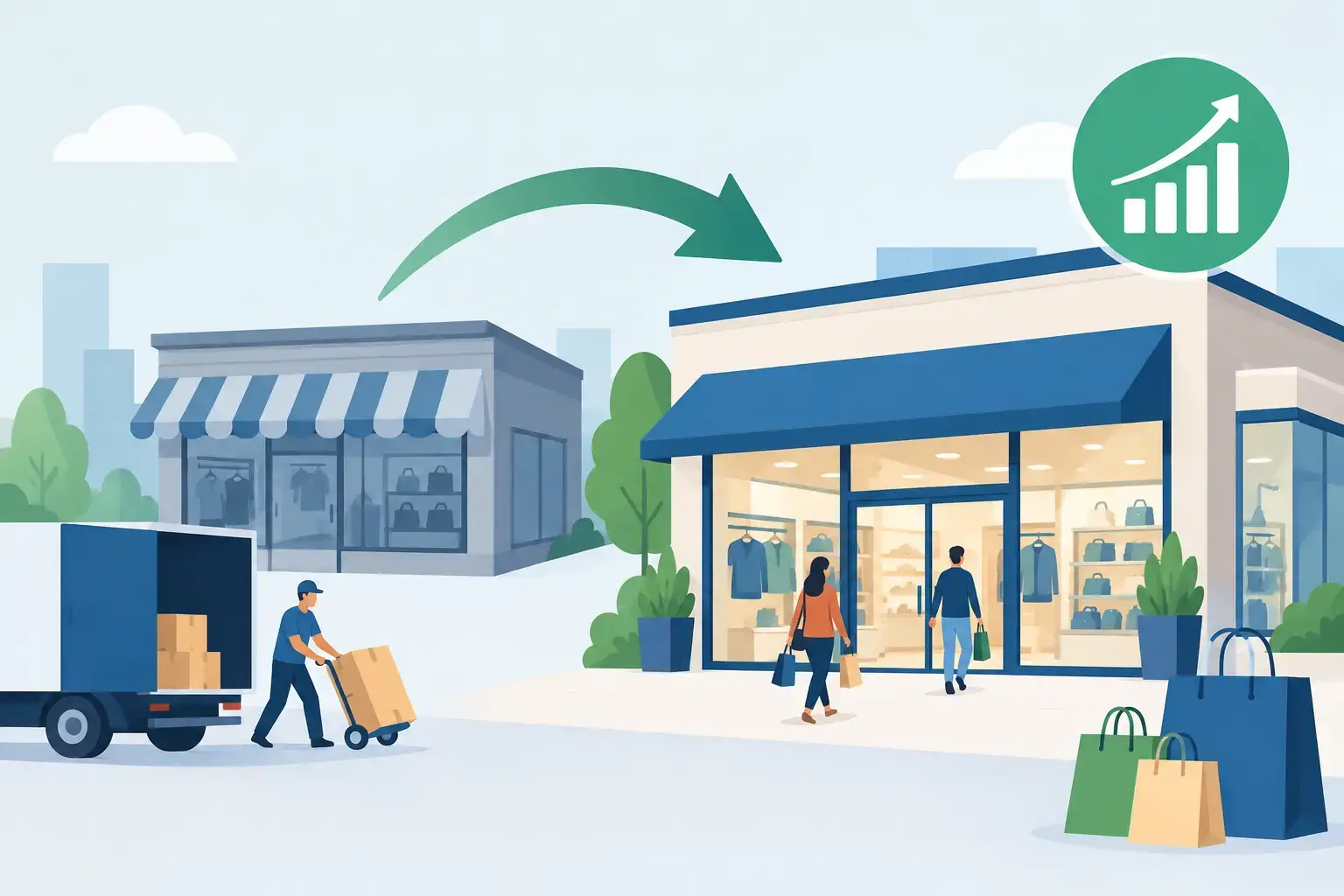
A retail store relocation example is most useful when it shows what happens between signing a new lease and serving the first customer at the new address. For a retailer, the move is not just about getting shelves, registers, and inventory from Point A to Point B. It is about protecting revenue, keeping employees informed, avoiding damaged merchandise, and making sure customers know exactly where to find you.
Consider a Toledo-area specialty retailer moving from a smaller storefront into a larger location a few miles away. The owner wants more floor space, better visibility, and room to carry additional inventory. The opportunity is exciting, but every day the store is closed creates pressure. A carefully planned commercial move turns that pressure into a manageable schedule.
Retail Store Relocation Example: The Starting Point
In this example, the store sells home goods, seasonal décor, gifts, and small furniture. The business has a team of eight employees, a stockroom full of boxed inventory, wall displays, checkout equipment, glass shelving, several heavy display cases, and a safe containing records and cash-management materials.
The old lease ends at the end of the month. The new space is available two weeks before that date, giving the owner a short overlap period. Rather than closing for a full week, the owner plans to move in phases: stock and nonessential fixtures first, then the main sales floor after the final weekend of business.
That decision makes sense because the new location is nearby and has secure access. If the new space needed construction, major electrical work, or inspections, the schedule would need more cushion. A move plan should reflect the building conditions, not just the distance between locations.
The goals for the move
The owner sets four clear goals before scheduling the movers:
- Keep the store open through the final high-traffic weekend.
- Protect sellable inventory with accurate counts and labeled zones.
- Reopen within two business days of the final move-out.
- Avoid asking employees to lift heavy fixtures or work long overnight shifts.
These goals guide every decision that follows. A relocation can be affordable without being rushed. The lowest quote is not always the lowest overall cost if damaged fixtures, missed opening dates, or lost inventory create bigger problems later.
Build the Plan Before Moving Day
The retailer begins planning six weeks ahead. The first step is a walkthrough of both locations with the moving team. This matters because commercial moves are often won or lost on details that do not appear in a basic inventory list: loading dock access, stairways, elevator reservations, parking restrictions, doorway width, floor protection, and the location of utility panels or sprinkler lines.
At the new store, the owner creates a simple floor plan. Each department receives a numbered zone, such as 1 for checkout, 2 for seasonal displays, 3 for furniture, and 4 for stockroom inventory. Every carton and fixture is labeled with both its contents and destination zone. That extra step prevents movers from stacking holiday merchandise in the office or placing a display wall in the wrong department.
The store also creates a separate list for items requiring special handling. In this case, that includes the safe, glass display cabinets, a large checkout counter, and a few heavy furniture pieces. These items should be identified before moving day so the crew can bring the right equipment, padding, and labor. Trying to figure it out while a truck is waiting costs time and creates risk.
Inventory is a business asset, not just cargo
Before any cartons leave the old store, employees complete a count of high-value and fast-selling merchandise. They do not need to count every decorative candle one by one if the inventory system is current, but they do need a reliable record of case counts, SKU categories, and any products already staged for sale.
The owner keeps a small amount of best-selling merchandise at the old store for the final weekend. The remaining backstock moves during the first phase. This allows the business to maintain a full-looking sales floor without moving every item at once.
For retailers with perishable goods, regulated products, or temperature-sensitive inventory, the plan changes. Those items may need dedicated transportation, climate-controlled storage, or a same-day transfer. The right approach depends on what you sell and what must stay protected to remain sellable.
Move in Phases to Reduce Downtime
During the first phase, the moving crew transports boxed backstock, office files, unused fixtures, extra shelving, and décor that is not needed for the final days of operation. The new store is already cleaned, utilities are active, and the owner has confirmed access with the landlord.
Once those items arrive, employees can begin setting up the stockroom and assembling simple displays. The goal is not to make the new location perfect before the final move. The goal is to prepare enough of the space that the last two days can focus on critical operations.
After the final weekend, the store closes early on Sunday. Employees complete a final count, remove personal items, secure customer records, and shut down the point-of-sale system according to the provider’s instructions. The moving crew then loads the checkout area, main fixtures, remaining inventory, and specialty items.
A full-service commercial moving company can handle packing support, moving labor, trucks, specialty handling, and temporary storage if the schedule changes. Newcomer Movers can also help businesses coordinate hauling for outdated fixtures or unwanted stock, which keeps the new space from becoming a holding area for items the store no longer needs.
Keep Customers and Employees in the Loop
A new location only works if people can find it. The owner starts communicating the move before the last week. Store signage announces the new address and opening date. Staff members are given a short, consistent message to share with regular customers. Business listings, social media profiles, voicemail greetings, email signatures, printed receipts, and delivery instructions are updated before reopening.
The message should be clear: when the current store closes, where the new store is located, and when customers can shop again. If the reopening date is still dependent on an inspection or final installation, say so. It is better to promise a reopening window honestly than to advertise a date that may change.
Employees need the same level of clarity. Give them written shift schedules, new parking instructions, access procedures, and a realistic explanation of what setup work is expected. Employees can help organize merchandise and prepare displays, but they should not be asked to move safes, loaded shelving, or oversized fixtures without trained help.
Prepare for the First Day at the New Store
The final stage is a reopening checklist. Before customers arrive, the owner tests the internet connection, point-of-sale equipment, card readers, phones, lighting, security system, and restrooms. The team verifies that exit paths are clear, signage is installed, and checkout supplies are available.
Merchandise does not have to be displayed exactly as it will look six months later. The priority is a clean, safe, shoppable store with core product categories in place. Some shelves can be refined after opening. What cannot wait is a working checkout counter, accurate prices, clear customer pathways, and employees who know where to find inventory.
The retailer in this example reopens on Tuesday morning, two days after the final move. A few nonessential display pieces are still being arranged, but customers can browse, pay, and receive the same friendly service they expect. Because the owner moved backstock first, assigned zones in advance, and used professional help for heavy and fragile items, the transition does not feel chaotic to the public.
A retail move is a major operational project, but it does not have to interrupt the momentum you have built. Start early, plan around your sales calendar, and choose moving support that treats your fixtures, inventory, and opening date like the business-critical assets they are.