How to Recycle Moving Boxes After a Move
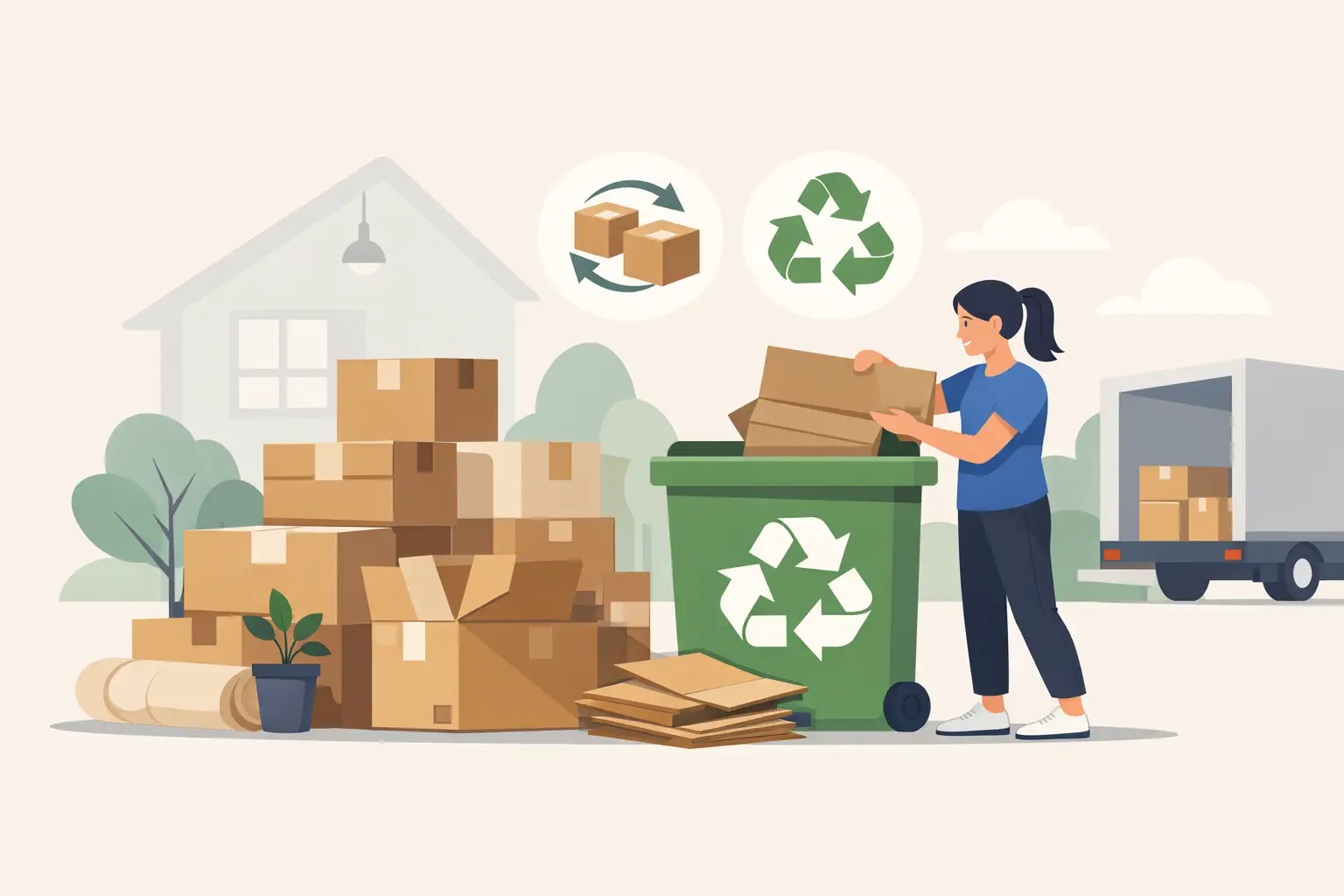
The last box is unpacked, the furniture is in place, and suddenly the garage or living room is full of empty cardboard. Knowing how to recycle moving boxes keeps a successful move from ending with a curbside pile of waste. It can also help another family, student, or local business get the packing materials they need without buying new boxes.
Most moving boxes are recyclable, but only when they are clean, dry, and accepted by your local collection program. Before you break everything down, take a few minutes to sort the boxes by condition. That small step makes disposal easier and can save useful cartons from being thrown away too soon.
Start by Sorting Your Moving Boxes
Not every box belongs in the recycling bin. A sturdy box that held books, linens, dishes, or household items may still have several moves left in it. Boxes that are crushed, torn, damp, greasy, or heavily marked up are better candidates for recycling.
Set aside cartons that are still clean and structurally sound. Remove any leftover packing paper, bubble wrap, foam, plastic bags, and loose labels. If a box has a strip of packing tape across the seam, it is usually fine to recycle, but large amounts of plastic tape should be removed when practical.
Be especially careful with boxes that held food, liquids, cleaning supplies, or anything that leaked. Cardboard contaminated with grease, oil, mold, paint, or chemicals may not be accepted in a standard recycling stream. When in doubt, check with your local waste and recycling provider before placing it at the curb.
Keep Boxes You May Need Again
If you are still organizing, decorating, or waiting on a storage plan, hold onto a reasonable number of quality boxes. They are useful for seasonal items, children’s keepsakes, paperwork, and future moves. Flattening them lets you store a stack behind a couch, in a closet, or along a garage wall without giving up much space.
There is a trade-off, though. Saving every carton can quickly become clutter, especially after a larger household move. Keep the strongest boxes in a few practical sizes, then pass along or recycle the rest.
How to Recycle Moving Boxes at the Curb
For many households, curbside recycling is the simplest answer. Cardboard is widely accepted, but local rules matter. Some communities ask residents to place flattened boxes inside the recycling cart. Others allow a neatly bundled stack next to the cart, provided it is tied with paper twine or placed in a paper bag.
Break each box down fully so it lies flat. Flattened cardboard takes up far less room in your bin, keeps collection areas tidy, and helps prevent loose boxes from blowing into the street. Do not leave boxes assembled or packed inside one another if your recycling program has size limits.
Before collection day, confirm a few details with your provider:
- Whether corrugated moving boxes are accepted with mixed recycling
- Whether tape, labels, staples, and shipping stickers need to be removed
- The maximum box size or bundle size allowed at the curb
- Whether wet cardboard must be thrown away instead of recycled
Dry cardboard is the key. If rain is expected and your boxes would sit outside for hours, wait for the next pickup or move them to a covered drop-off location. Once cardboard becomes soaked, its fibers weaken and recycling facilities may reject it.
Do Not Put Packing Materials in With Cardboard
A moving box often comes with more than cardboard attached to it. Plastic stretch wrap, foam peanuts, air pillows, bubble wrap, and furniture pads are handled differently from paper-based boxes. Putting them all together can contaminate the recycling load.
Paper packing material can often be recycled if it is clean and uncoated. Plastic film and bags may require a separate collection location. Foam packing materials are frequently not accepted at curbside. Sort these materials separately rather than stuffing them inside a flattened box.
Reuse Boxes Before You Recycle Them
The most useful moving box is often the one that gets another job. Reusing clean cartons extends their life and reduces demand for new packaging. If you have a neighborhood group, community board, workplace, school, or apartment complex, someone is likely looking for free boxes.
Offer only boxes that are clean, dry, and free of pests or strong odors. Let people know the box sizes and approximate quantity, and flatten them for easy pickup. Wardrobe boxes, dish-pack cartons, and sturdy small book boxes are especially useful because they can be more expensive to replace.
Local charities, thrift stores, libraries, schools, and small businesses may also have occasional use for clean boxes. Call first rather than dropping them off unannounced. Storage facilities and moving companies sometimes accept good boxes as well, although availability and policies vary.
For a smaller stack, use boxes around the house. They can organize a garage, protect holiday decorations, hold donation items, or create temporary sorting stations during a renovation. Avoid using old cardboard for long-term storage in damp basements, sheds, or garages. Moisture and pests can damage both the boxes and the items inside.
When Boxes Are Too Damaged to Reuse
A box with a few creases can still be recycled. A box with water damage, mildew, food residue, or a chemical spill needs more care. Recycling facilities rely on clean paper fibers, and contamination can affect an entire batch of material.
Remove any recyclable dry sections from a damaged carton if your local program permits it. For example, a clean top flap may be recyclable even if the bottom was ruined by a spill. If the whole box is wet or contaminated, place it in regular trash according to local guidance.
Do not burn moving boxes in a fireplace, fire pit, or wood stove. Many cartons contain inks, adhesives, coatings, and tape residue that are not meant to be burned indoors or near your home. Burning cardboard also creates ash and flying embers, which can be a safety concern.
Consider a Hauling Option for Large Moves
A one-bedroom apartment may leave behind a manageable stack of boxes. A family home, office relocation, or commercial move can create a volume that will not fit in one recycling cart. In that situation, a scheduled cardboard drop-off, dumpster rental, or professional hauling service may be more practical.
A hauling option is especially helpful when boxes are mixed with unwanted furniture, broken household goods, construction debris, or old storage items. The goal is not simply to clear the space fast. It is to separate reusable, recyclable, donatable, and disposal-only items whenever possible.
For Toledo-area customers who want one dependable team for moving, packing materials, storage, and post-move cleanup, Newcomer Movers can help simplify the work. A locally owned and operated company since 2007, our team understands that moving is not finished until your space feels usable again.
Make Your Next Move Easier on the Boxes
A little planning protects boxes from the start. Use the right box size for the item, avoid overpacking heavy books into large cartons, and seal the bottom with strong packing tape. Keep boxes dry during loading and unloading, especially in Ohio rain or snow.
Labeling also matters. Write on removable labels or use small pieces of tape instead of covering every side with permanent marker. Clear labels help during unpacking, while cleaner cardboard is easier to pass along or recycle afterward.
If you expect to move again soon, consider renting reusable moving totes or choosing professional packing support for fragile and specialty items. Cardboard remains a practical choice for many moves, but it does not have to become a one-time-use product.
The best time to plan for box recycling is before moving day, but the second-best time is right after you unpack. Flatten what is worn out, share what is still useful, and keep only the cartons that genuinely earn their space. A clear home is a good start, and a responsible finish makes settling in feel even better.