Best Moving Supplies for Apartments to Buy
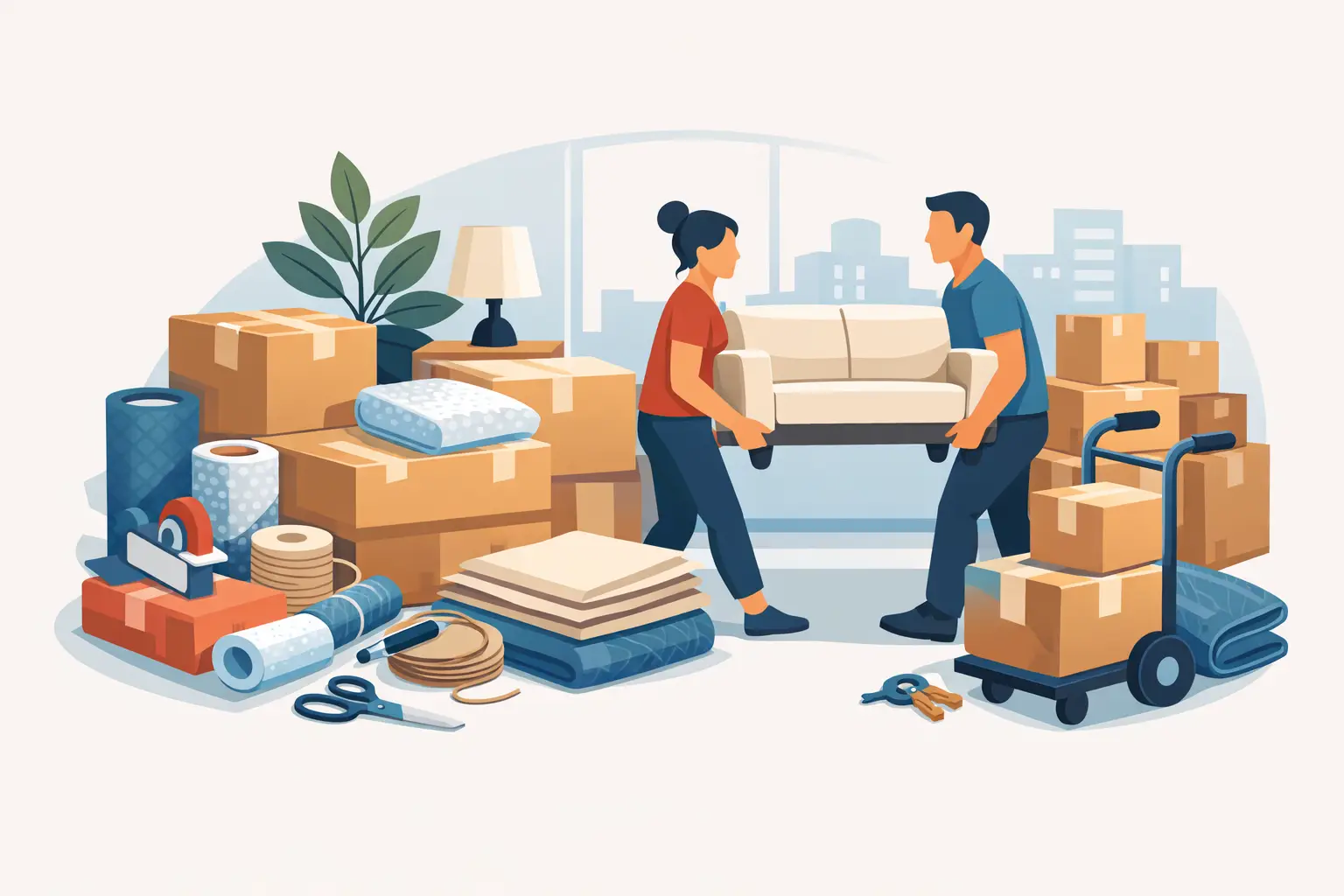
Apartment moves have a way of making every hallway, elevator reservation, parking space, and box count. The best moving supplies for apartments are not necessarily the biggest or most expensive options. They are the supplies that protect your belongings, fit through tight spaces, and help you load and unload without turning move day into a long, frustrating scramble.
A good supply plan also keeps you from buying too much. Apartment residents often have less furniture than a full-house move, but they may have more breakable items, compact storage areas, stairs, or building rules to manage. Start with what you own, how far you are moving, and whether you will pack yourself or have professional movers handle the work.
Best Moving Supplies for Apartments: The Essentials
For most apartment moves, sturdy boxes, quality tape, packing paper, stretch wrap, labels, and protective padding do the heavy lifting. These basics work together. A strong box is only as useful as the tape holding it shut, and careful wrapping matters just as much as the box itself when you are carrying items through a shared building.
Choose small and medium moving boxes for the majority of your belongings. Small boxes are ideal for books, canned goods, tools, and other heavy items that become difficult to lift when packed together. Medium boxes work well for kitchen items, clothing, toys, and everyday household goods. Large boxes have a place, but they should be reserved for light, bulky belongings such as pillows, bedding, lampshades, and comforters.
Avoid relying on worn grocery boxes or thin boxes gathered from retail stores. They may be free, but they are not always clean, uniform, or strong enough for stacking in a truck. Matching moving boxes are easier to label, carry, and load safely. They also make better use of limited truck space and storage space.
Packing tape and a tape dispenser
Use moving-grade packing tape rather than masking tape, painter’s tape, or duct tape. Packing tape is designed to keep box seams closed under weight and movement. A handheld tape dispenser is a small purchase that saves time when you are sealing dozens of boxes.
Tape the bottom seam of each box and run a second strip across it for heavier loads. Do not overfill boxes simply because they are strong. A box that is too heavy is harder to carry up stairs and more likely to be dropped or split open.
Packing paper, bubble wrap, and foam protection
Packing paper is one of the most useful supplies for an apartment move because it handles many jobs. Use it to wrap dishes, fill empty spaces in boxes, protect small decor, and separate fragile items. Plain, unprinted packing paper is a cleaner choice than newspaper, which can transfer ink onto glassware, ceramics, and light-colored surfaces.
Bubble wrap provides extra protection for televisions, framed art, mirrors, electronics, and fragile decorative pieces. Use it where impact protection is needed, not as filler for every box. For dishes and glassware, packing paper usually works well when items are wrapped individually and packed upright with no empty space.
Furniture pads or moving blankets are worth having for wood furniture, glass tabletops, dressers, and large electronics. In an apartment building, they also protect belongings from doorframes, elevator walls, and corners. Stretch wrap can secure drawers, cabinet doors, cushions, and loose pieces without leaving tape residue on furniture.
Supplies That Make Tight Spaces Easier
The challenge of an apartment move is often access, not distance. A ground-floor unit with a wide entryway needs a different approach than a third-floor walk-up or a high-rise with a scheduled elevator. Before buying supplies, measure large furniture and check the route from your unit to the truck.
A hand truck or utility dolly can make a major difference when moving stacked boxes, appliances, or heavier furniture. A four-wheel furniture dolly is helpful for items that can be rolled across flat surfaces, but it is not a substitute for safe lifting on stairs. If your building has elevators, confirm the size, availability, loading entrance, and reservation process before move day.
For furniture with removable legs, use a small hardware organizer, zipper bags, and a permanent marker. Keep screws, bolts, brackets, and remotes labeled by item. Tape the labeled bag to the underside of the furniture only if it will not damage the finish. Otherwise, place all hardware bags in one clearly marked essentials box that stays with you.
Doorway and corner protection can be useful in buildings with narrow passages, especially when moving bulky sofas, desks, or bed frames. It may feel like an extra step, but repairing a scraped wall or damaged doorframe can cost far more than the supplies needed to prevent it.
Do Not Forget the Apartment Move-Day Kit
Pack one box or tote that does not go into the truck until the final load. This is the box you will need while your apartment is empty and before your new place is fully unpacked. Keep it nearby, not buried beneath furniture or stacked in a storage unit.
Your move-day kit should include practical items such as box cutters, scissors, markers, a phone charger, basic tools, cleaning supplies, paper towels, trash bags, medications, snacks, water, toilet paper, and important documents. Include keys, parking instructions, elevator confirmation details, lease paperwork, and contact information for your building manager when applicable.
If you are moving with children or pets, prepare a separate bag for their immediate needs. Familiar toys, food, medications, chargers, and a change of clothes can prevent unnecessary stress during a busy day. The same goes for an overnight bag if your move involves a long drive or a delayed delivery window.
How Much Should You Buy?
The right amount depends on the size of your apartment and how much you have stored in closets, cabinets, and off-site spaces. A furnished one-bedroom apartment may need far fewer boxes than a two-bedroom apartment with a home office, children’s items, seasonal decor, and a packed kitchen.
Buy a reasonable starting quantity, then reassess after packing your kitchen, closets, and bookshelves. Those areas often reveal how much more you own than expected. It is better to have a few extra small and medium boxes than to force heavy items into oversized boxes or leave packing until the last night.
Do not forget specialty boxes when they fit your situation. Wardrobe boxes can make clothing easier to move from a closet, though they cost more and take up space. Dish-pack boxes offer thicker protection for glassware and dishes. TV boxes and picture boxes are worthwhile when you have valuable screens, mirrors, or framed artwork that does not fit safely in a standard carton.
When Professional Packing Supplies and Help Make Sense
DIY supplies are practical for many apartment moves, particularly when you have time to pack carefully and help available on move day. But there are situations where professional packing and moving service is the smarter value. Fragile collections, large TVs, antiques, oversized furniture, pianos, safes, long stair carries, and tight building schedules all add risk.
A locally owned and operated company such as Newcomer Movers can provide the moving supplies, packing support, careful loading, storage, hauling, and transportation needed to keep an apartment move under control. For Toledo-area residents, that means fewer vendors to coordinate and experienced movers who understand that shared hallways, stairwells, and building rules require extra care.
Professional help is also worth considering when time is limited. If your lease ends Friday, your elevator is reserved for a narrow time block, and you still have a kitchen full of dishes to pack, the lowest-cost option on paper may not be the least expensive after missed work, damaged belongings, or rushed last-minute decisions.
Pack for the First Unload, Not Just the First Load
The easiest apartment move is planned backward from the new door. Clearly label each box with the room and a short description of its contents, such as “Kitchen – everyday dishes” or “Bedroom – winter clothes.” Write on at least two sides so the label remains visible when boxes are stacked.
Keep heavy boxes low, fragile boxes on top, and essential items accessible. Before the truck arrives, make sure furniture and boxes can be unloaded in an order that leaves walkways clear. That extra organization makes a new apartment feel manageable faster, even if the full unpacking takes a few days.
The best supply is the one that prevents a problem before it starts. Choose dependable materials, protect the items that matter most, and give yourself enough time to pack with care. A well-prepared apartment move leaves you free to focus on getting settled instead of searching for a missing screw, a broken dish, or one more box at the end of the night.