How to Move a Safe Without Risking Injury
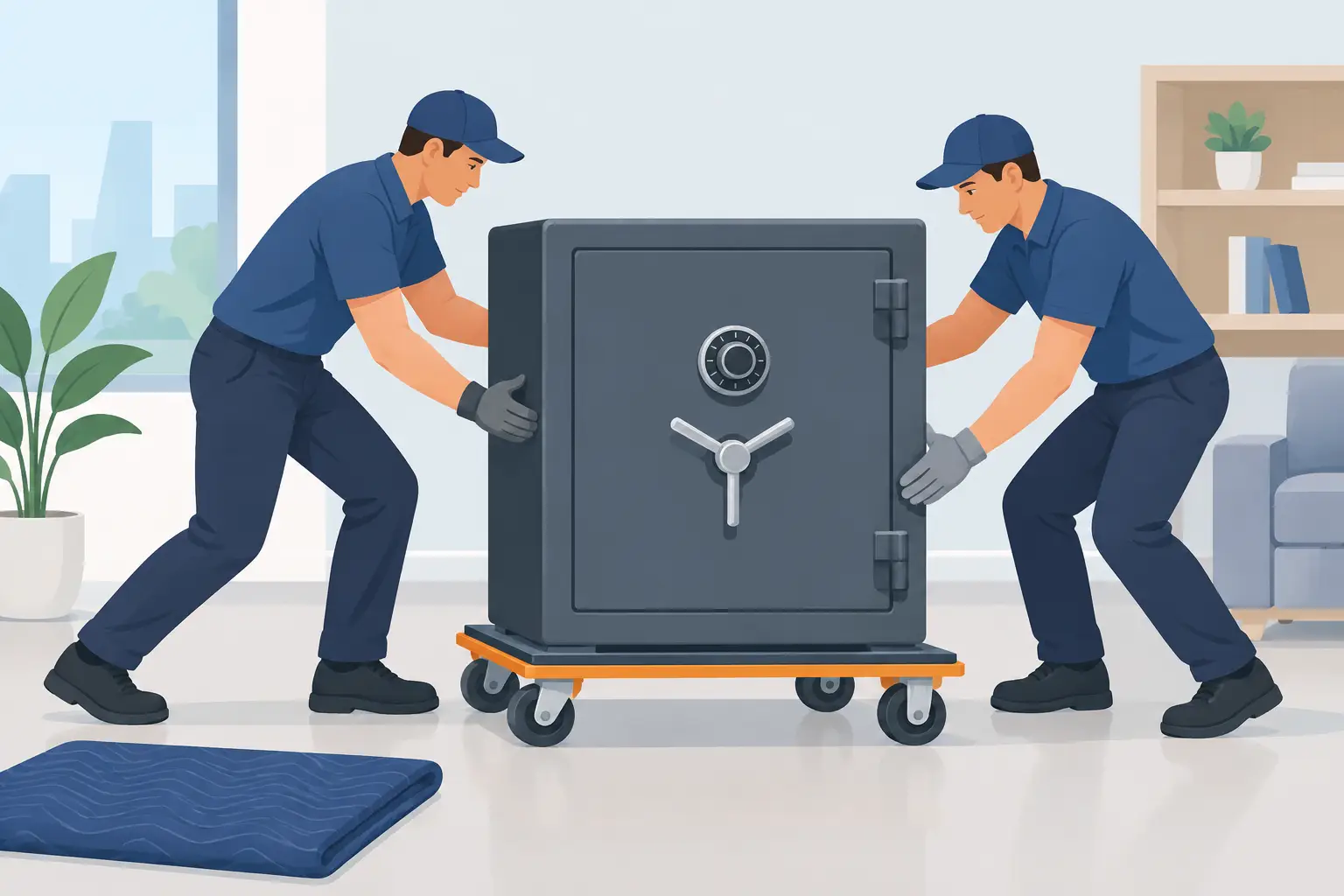
A safe can look manageable until you try to tip it. What appears to be a compact metal box may weigh several hundred pounds, with most of that weight concentrated low and toward the door. Learning how to move a safe starts with respecting that reality: this is not a standard moving task, and a rushed approach can damage floors, walls, stairs, the safe itself, or someone’s back.
For a small document safe, the right equipment and enough capable help may be enough. For a gun safe, commercial safe, antique safe, or anything going up or down stairs, professional handling is usually the safer and more affordable decision once you consider the risk of injury and property damage.
Start by Identifying the Safe and Its Weight
Do not guess at a safe’s weight. Look for a model number, manufacturer label, paperwork, or online specifications before moving day. Small home safes may weigh 100 to 300 pounds, but larger gun safes often weigh 500 to 1,000 pounds or more. Commercial and high-security models can be far heavier.
Weight alone is not the whole concern. A safe’s dimensions, center of gravity, door style, exterior finish, and location all affect the move. A tall safe can become unstable when tilted. A safe with a thick door may pull forward unexpectedly if the door is not secured. Older safes may have delicate finishes or mechanical locking parts that need extra protection.
If the safe is bolted to concrete, wood framing, or a platform, it must be unbolted correctly before it can move. Never pull against anchored bolts with a dolly or try to force a safe free. That can damage the safe’s base, flooring, and the structure beneath it.
Measure the Route Before You Move a Safe
The route matters as much as the safe. Measure the safe’s height, width, and depth, then measure every doorway, hallway, stair landing, turn, elevator, ramp, and vehicle opening it must pass through. Remember to account for the moving blanket, straps, and hand clearance around the safe.
Clear the route completely. Remove rugs that can bunch up, furniture that narrows a hallway, children’s toys, cords, and loose items from stairs. Protect hardwood, tile, and finished concrete with floor runners, plywood, or other suitable coverings. A safe can crack tile, gouge wood, and leave deep marks in vinyl flooring in seconds.
Pay close attention to stairs. Stairs create a serious tipping and crushing hazard, particularly when there is a turn or a narrow landing. If your safe must go up or down stairs, through a tight basement opening, or across a long outdoor grade, it is time to arrange specialty moving help.
Gather the Right Equipment, Not Just Extra Hands
A standard hand truck is not designed for every safe. A heavy-duty appliance dolly or safe-rated dolly with load straps provides better support and control. Depending on the safe and route, experienced crews may also use stair-climbing equipment, lift gates, ramps, furniture pads, skid boards, and floor protection.
At minimum, the move requires properly rated moving straps, heavy-duty gloves with grip, moving blankets, and a dolly that can safely handle the full weight. Closed-toe work shoes are essential. Avoid sandals, slippery footwear, or loose clothing that can catch on equipment.
More people do not automatically make the move safer. Too many uncoordinated helpers in a narrow space can cause confusion, blocked footing, and uneven lifting. Everyone involved should understand the route, their position, and the commands being used before the safe leaves the floor.
Never attempt to move a safe with shoulder straps alone. These straps can be useful in certain professional applications, but they do not replace a properly secured dolly and controlled equipment. They also create a dangerous situation if the load shifts suddenly or someone loses balance.
Prepare the Safe for Transport
Empty the safe before moving it whenever possible. Remove documents, firearms, valuables, shelves, and loose interior accessories. This lowers the weight and prevents items from shifting inside. If you are moving firearms, follow all applicable laws and transport them safely and separately from the safe.
Lock and secure the safe door. The door should never swing open during a move. If possible, use the manufacturer’s instructions for securing it. Do not tape directly to a finished exterior, as adhesive can leave residue or damage certain coatings.
Wrap the safe in moving blankets and secure the padding with moving bands or stretch wrap around the blankets, not against vulnerable surfaces. The padding protects corners, door hardware, flooring, walls, and the safe’s finish. Keep the lock, keypad, and handle protected from hard contact.
How to Move a Safe With a Dolly
For a small safe on one level, use a slow and deliberate process. Position the dolly against the side or back of the safe, not against the door or handle. With the safe kept upright as much as possible, carefully tip it only enough to slide the dolly plate underneath. Secure the safe tightly to the dolly with rated straps.
One person should guide the dolly while others steady the load from the sides when space allows. Keep hands and feet clear of the bottom edge at all times. Do not place fingers beneath the safe to adjust its position. If it starts to tip, step away rather than trying to catch hundreds of pounds of moving steel.
Move slowly over thresholds and uneven surfaces. A small lip at a doorway can stop a dolly wheel and shift the load forward. Use a ramp, threshold plate, or suitable board when needed. Avoid sudden turns, fast pulls, and steep angles.
The safe should remain upright whenever practical. Some manufacturers provide specific guidance about laying a safe down, especially those with electronic locks or particular fireproofing designs. If you do not know the manufacturer’s recommendation, keep it vertical and avoid unnecessary tilting.
Loading the Safe Into a Truck
A lift-gate truck is generally the safest choice for heavy safes. It allows the safe to be raised in a controlled manner instead of pushed up a narrow ramp. Once inside, the safe should be positioned against a solid wall area, padded, and secured with heavy-duty tie-downs so it cannot shift during transit.
Truck ramps can work for lighter safes with the correct equipment and trained handlers, but they raise the risk considerably. A safe can gain momentum quickly on an incline. Never stand directly downhill from a safe on a ramp, and never rely on one person to hold a heavy safe in place.
Do not transport a safe loose in a pickup bed or cargo area. Hard braking, turns, and uneven roads can cause it to slide or tip. Proper cargo securement is not optional.
Know When to Call Professional Safe Movers
There is a clear point where a do-it-yourself move stops making sense. Call professionals if the safe weighs more than you can confirm your equipment will handle, if stairs are involved, if the route is tight, or if the safe is especially tall, expensive, antique, bolted down, or located in a commercial setting.
Professional safe movers bring trained crews, specialty dollies, protective materials, and transportation designed for heavy items. That preparation protects more than the safe. It protects your home, business, employees, family, and moving schedule.
For Toledo-area customers, Newcomer Movers offers careful heavy-item transport backed by a locally owned and operated team serving customers since 2007. Whether a safe is moving across town, into storage, or as part of a long-distance relocation, experienced handling can remove one of the hardest parts of the move from your to-do list.
A Safe Move Is a Planned Move
Do not let a heavy safe become the last-minute item everyone tries to figure out on moving day. Confirm its weight, inspect the route, use equipment rated for the job, and choose professional help when the situation calls for it. The best outcome is simple: the safe arrives secure, your property stays protected, and everyone goes home without an injury.