Moving Container Versus Rental Truck Options
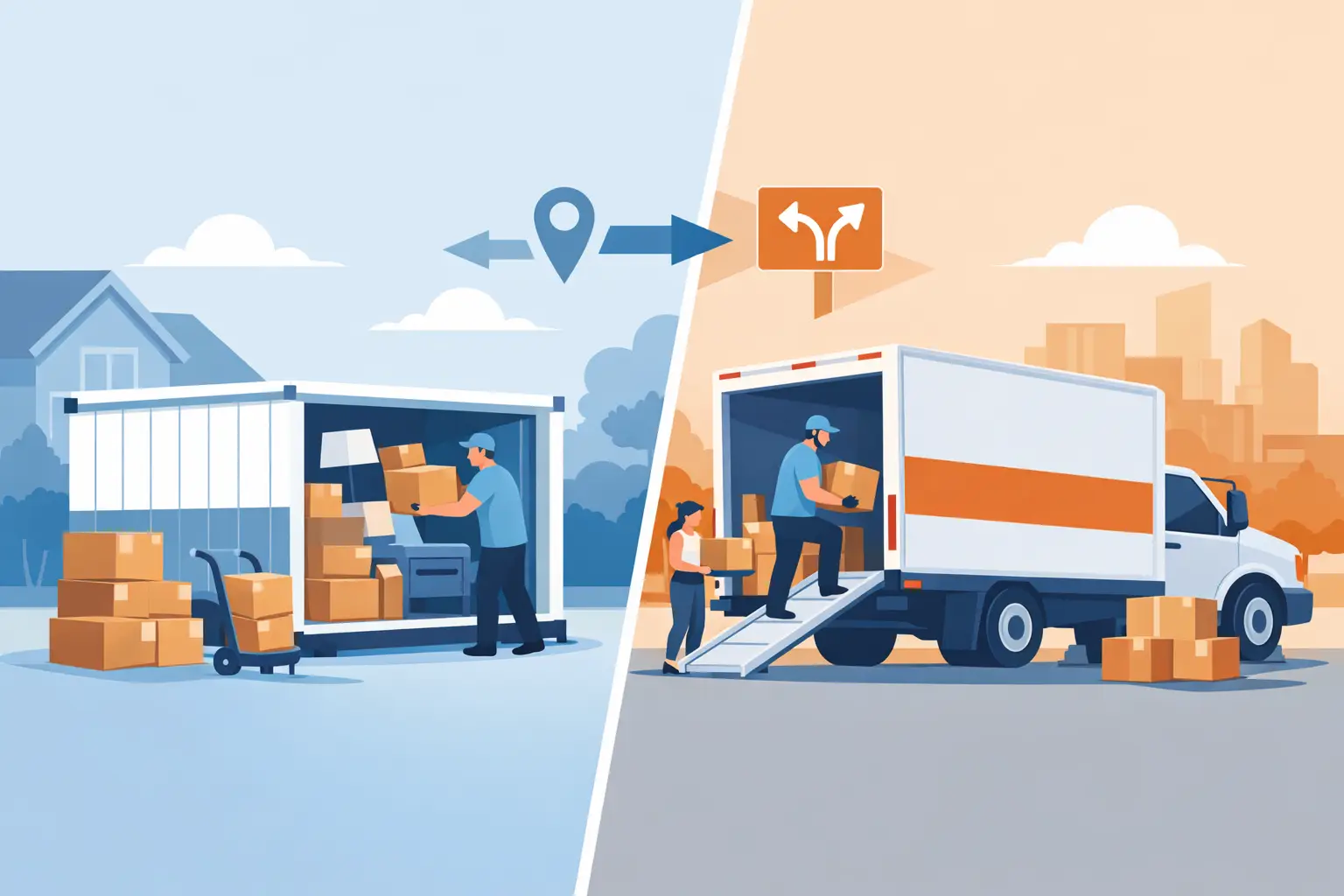
A moving container versus rental truck decision often comes down to one question: Do you want flexibility with less driving, or do you need a lower-cost move completed on your own schedule in one day? Both can work well, but they solve different problems. The right choice depends on distance, how much you are moving, where you can park, and how much work you want to handle yourself.
For Toledo households, students, seniors, and businesses, the best moving plan is not always the cheapest option on paper. A truck can look affordable until fuel, mileage, extra days, and labor are added. A portable container can reduce pressure, but it may not work where parking access is limited. Looking at the full picture helps you choose with confidence.
Moving Container Versus Rental Truck: The Main Difference
A moving container is delivered to your home or business, where you load it over a scheduled period. The provider picks it up and transports it to your new location, or keeps it in storage until you are ready. You do the packing and loading unless you arrange help separately, but you do not drive a large vehicle across town or across the country.
A rental truck gives you immediate control. You pick up the truck, load it, drive it to the destination, unload it, and return it according to the rental terms. It is a familiar option for local moves, apartment moves, and customers comfortable handling a larger vehicle.
Neither option is automatically better. A rental truck is often the practical choice for a straightforward local move with a clear start and finish. A container can be the better fit when your schedule is uncertain, your move involves storage, or you would rather not drive a loaded truck on the highway.
When a Rental Truck Makes the Most Sense
A rental truck is usually a strong value when you are moving locally and can complete the job quickly. If you have friends or family ready to help, access to both properties, and enough time to load and unload in one day, a truck keeps the process direct.
It also gives you control over your route and timing. You are not waiting for a delivery window, and you can make same-day decisions if your closing, lease, or keys are confirmed. For a small apartment, dorm room, or limited amount of furniture, a properly sized truck may be more efficient than paying for container delivery and transportation.
However, make room in the budget for more than the base rental price. Local truck rentals may include mileage charges, fuel, insurance coverage, equipment rentals, and an extra-day fee if the move runs long. Long-distance rentals can include mileage, but fuel and road expenses still matter. You will also need to be comfortable navigating turns, bridges, parking lots, and tight residential streets with a large vehicle.
A truck may be less appealing if you are moving a long distance with young children, coordinating a senior move, or managing a stressful business relocation. Driving a fully loaded truck for several hours is real work, especially if you still need to unload at the end of the day.
When a Moving Container Is the Better Fit
Portable moving containers are built for moves that do not fit neatly into a single day. You can load at a more manageable pace, which is helpful when you are sorting belongings, waiting for a home closing, renovating, or moving in stages. The container can also serve as temporary storage between locations.
This option removes the driving responsibility. Once the container is loaded and secured, the transportation is handled for you. That can be a major relief on a long-distance move or for customers who do not want to operate a truck they rarely drive.
Containers are especially useful in these situations: a delayed closing, a gap between leases, a downsizing project, a move that requires temporary storage, or a household that needs several days to pack and load. Businesses may also prefer containers when equipment, files, inventory, or office furniture must be relocated without shutting down everything at once.
The trade-off is access. A container needs a safe, legal place to sit at both the pickup and delivery locations. A narrow driveway, busy street, apartment complex, homeowners association, or local parking rule can create complications. Before reserving one, confirm the available space and ask whether a permit is required.
Compare the Real Cost, Not the Advertised Price
The most useful comparison is the final cost of completing the move, not the first number you see. With a rental truck, ask about the daily rate, mileage policy, fuel expectations, insurance options, dolly rental, moving pads, taxes, and late-return charges. If you are moving long distance, account for lodging and meals if the trip requires an overnight stop.
With a moving container, get clear pricing for delivery, pickup, transportation, monthly storage if needed, and the length of time the container can remain at your property. Some customers pay more for a container than a truck, but find that the added time and reduced driving stress are worth it.
Labor is another important part of the decision. Loading either option safely takes planning and strength. Heavy furniture, appliances, pianos, safes, and awkward commercial items should not be treated as a casual weekend project. Damage to the item, the property, or the people lifting it can cost more than professional help.
If you need packing, loading, specialty handling, storage, or hauling in addition to a truck or container, bundling services can simplify the move. Newcomer Movers is locally owned and operated in Toledo, has served customers since 2007, and can help coordinate practical moving, storage, hauling, and rental needs with movers who care.
Timing and Storage Can Change the Answer
The timing of your move may matter more than the distance. A rental truck works best when possession dates are firm. You load, drive, unload, and return it. That is efficient, but it does not leave much room for a delayed closing, a contractor running behind, or an apartment that is not ready.
A container gives you more breathing room. You can load before the final moving day and keep your belongings secured while you wait for the next step. For families juggling work and school schedules, or seniors transitioning into a smaller home or assisted living community, that extra time can make a difficult move feel more manageable.
For commercial moves, consider downtime. A truck may work for a quick weekend office relocation. A container may be better when departments need to pack gradually, equipment has to move in phases, or storage is needed during a remodel. The goal is not simply getting items from point A to point B. It is keeping your household or operation moving with as little disruption as possible.
Loading and Driving Considerations
Both options require smart loading. Place heavy items low and toward the front, distribute weight evenly, protect furniture with pads or wrap, and secure each tier so it cannot shift. Leave no open gaps near large items where a load can slide during transport.
A rental truck requires careful driving as well. Allow extra braking distance, watch overhead clearances, use wider turns, and avoid backing up without a spotter when possible. Do not assume a car route is suitable for a box truck. Low branches, tight alleys, narrow driveways, and small parking areas can turn a simple move into a difficult one.
A container removes the road portion from your to-do list, but loading is still your responsibility unless you arrange labor. If stairs, long carries, heavy pieces, or fragile items are involved, professional movers can protect both your belongings and your back.
Choose the Option That Fits Your Move
Choose a rental truck when your move is local or time-sensitive, you can load and unload quickly, and you are comfortable driving. Choose a moving container when you need flexibility, temporary storage, or transportation without the responsibility of driving a large truck.
Before booking, walk through both properties, measure the largest furniture, check parking access, and write down every service you may need. A move goes better when the plan matches your real schedule, your physical workload, and the care your belongings deserve.