Storage Unit or Portable Container: Which Fits?
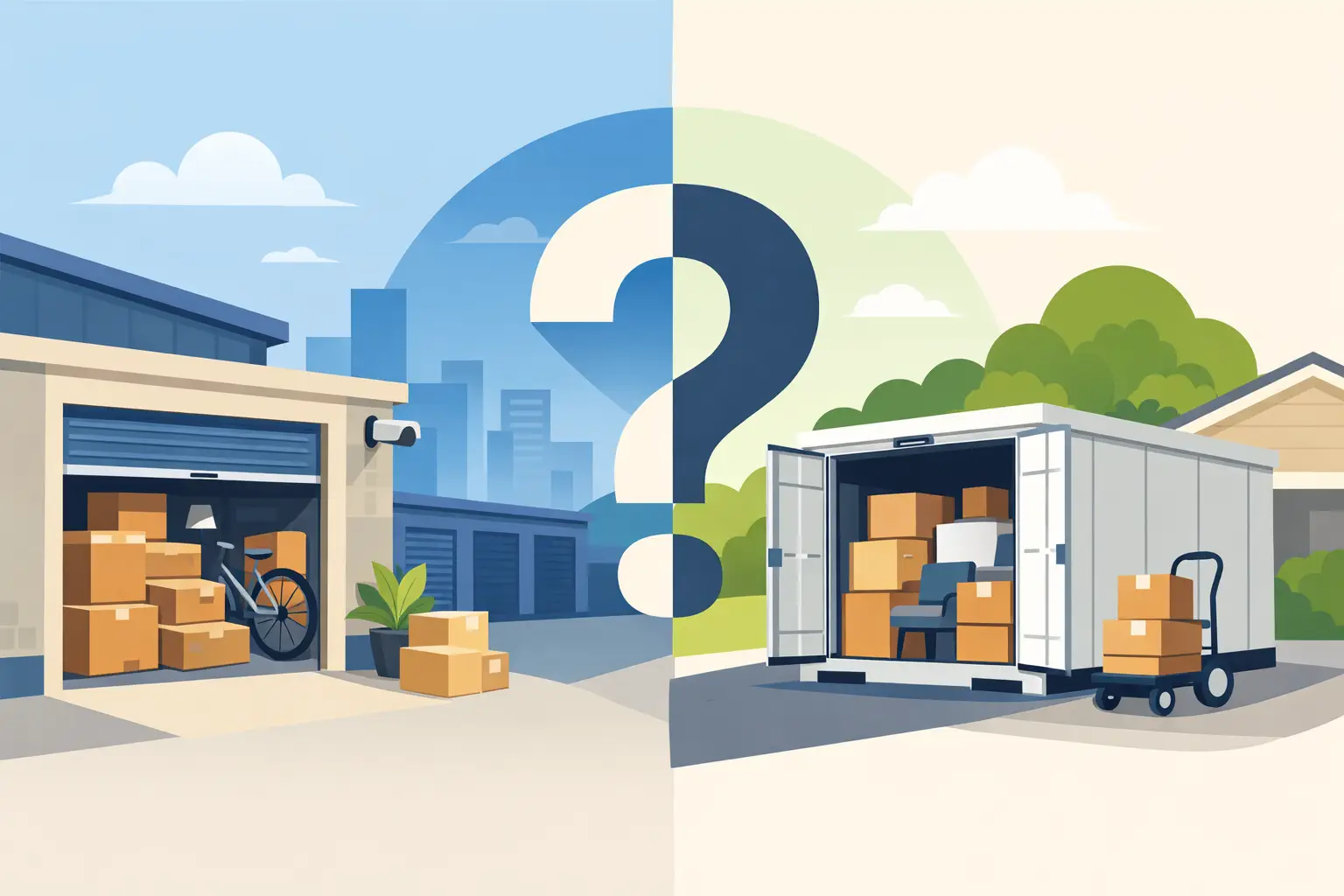
A storage unit or portable container can both solve the same immediate problem: you need your belongings out of the way, protected, and available when the timing is right. But the better choice depends on where you are moving, how often you need access, and whether you want to do the loading yourself or have movers handle the heavy work. For Toledo households, students, seniors, and businesses, choosing the right option can take a lot of pressure off an already busy move.
Start With How You Need to Use Storage
The biggest difference is simple. A self-storage unit keeps your belongings at a storage facility. A portable container is delivered to your home, apartment, job site, or business location so you can load it where you are.
Neither option is automatically better. A storage unit may be the practical choice when you want regular access to your belongings or need climate-controlled space. A portable container may make more sense when you are renovating, preparing a home for sale, moving in stages, or want to avoid making multiple trips with a rental truck.
Before reserving space, consider three questions: Will you need to retrieve items often? Can a container be placed safely and legally at your location? And do you need protection from major temperature or humidity changes? Your answers usually point clearly toward the right solution.
When a Storage Unit Is the Better Choice
A storage unit gives you a dedicated location for belongings you do not need in your home, but may need to access from time to time. It works well for seasonal furniture, business inventory, documents, extra household items, and belongings kept during a long-distance move or downsizing project.
Regular access matters
If you expect to stop by for boxes, tools, inventory, clothing, or furniture, a storage unit is often more convenient. You can visit the facility rather than scheduling a container pickup or unloading everything at once. This is especially useful for a small business that needs to rotate inventory or a family that is between homes and wants access to selected items.
A unit also lets you organize your space with aisles, shelving, and labeled boxes. That sounds basic, but it makes a real difference when you need one item from the back without moving half your belongings first.
Climate control can protect sensitive items
For valuables affected by heat, cold, moisture, or humidity, climate-controlled storage is often worth considering. Wood furniture, musical instruments, electronics, photographs, documents, antiques, and certain business records can all benefit from a more stable environment.
Climate control may cost more than standard storage, so it is not necessary for every load. Durable patio furniture, properly packed tools, and many household goods may be fine in standard space. Still, if you are storing items for months and would be upset by warping, mildew, or moisture damage, this is a trade-off worth making.
Facility storage keeps your property off-site
A storage unit is also a strong fit when your driveway, parking area, apartment complex, or commercial property cannot accommodate a portable container. Some neighborhoods, landlords, homeowner associations, and municipalities have rules about temporary containers. An off-site unit avoids that issue and keeps your property clear.
When a Portable Container Makes More Sense
Portable storage is built around convenience at your location. The container comes to you, giving you time to load at your own pace instead of completing everything in one rushed rental-truck day.
This can be a major advantage during a remodel. Rather than stacking furniture in a spare room or garage, you can move it into the container and keep work areas open. Home sellers also use portable storage to clear out extra furniture, personal items, and clutter before photos, showings, or open houses.
For a move, the container can reduce handling. Your belongings are loaded once at your current location, then transported or stored as needed. Fewer load-and-unload cycles can mean less work and less chance of damage from repeatedly moving heavy furniture.
It gives you breathing room during a move
Closing dates change. Apartments are not always ready on schedule. A new job may require you to leave before your next home is available. Portable storage gives you a flexible middle ground when the move-out and move-in dates do not line up perfectly.
You can load nonessential items first, keep daily necessities in the home, and finish the final load closer to moving day. That staged approach is especially helpful for families with children, seniors who are downsizing, and homeowners coordinating repairs before listing or moving in.
Loading help changes the equation
A container does not mean you must do all the work yourself. If you have large furniture, heavy appliances, fragile items, a piano, or a safe, professional loading can protect both your belongings and your back. The right moving team can pack, load, transport, store, and unload, so the container becomes part of a full-service plan rather than another project on your list.
Storage Unit or Portable Container: Compare the Real Trade-Offs
The choice usually comes down to access, timing, placement, and the type of belongings being stored.
A storage unit is better for frequent access and for items that need climate-controlled protection. It can also be more practical if you have limited parking or strict property rules. The trade-off is that you must transport your belongings to the facility, whether you handle that yourself or hire movers.
A portable container is better for loading at home, clearing space during a renovation, and managing an uncertain moving timeline. The trade-off is that access can be less immediate once the container is moved to storage, and container placement must work for your property.
Cost matters too, but it should not be the only factor. Compare the full picture: monthly storage, delivery or transportation, rental trucks, fuel, loading labor, packing supplies, and the time you would spend coordinating separate services. A lower monthly rate is not always the lower overall cost if it creates extra trips, extra labor, or a stressful deadline.
Common Situations and the Best Fit
If you are downsizing from a longtime family home, a storage unit may help you sort possessions gradually. You can keep meaningful items protected while deciding what to move, donate, sell, or pass along to family.
If you are remodeling a kitchen, basement, office, or retail space, a portable container often keeps the work area clear without filling every room or hauling furniture across town. If your renovation includes sensitive furniture or electronics, ask about the best storage conditions before choosing standard space.
If you are moving locally and your dates are tight, either option can work. Choose a storage unit if you want regular access and a facility-based solution. Choose portable storage if loading at your doorstep and moving in stages would make the process easier.
For commercial and industrial moves, the decision often depends on operations. Businesses that need ongoing access to files, supplies, or inventory may prefer a unit. Businesses clearing a workspace, completing a renovation, or relocating equipment in phases may benefit from a container placed on-site when permitted.
Get the Storage Plan That Fits Your Move
The best storage plan should fit your schedule, property, belongings, and budget – not force you into a one-size-fits-all rental. Newcomer Movers has been locally owned and operated since 2007, providing Toledo-area customers with moving, packing, self-storage, climate-controlled storage, portable storage, hauling, and specialty moving help under one dependable team.
When you request a quote, be ready to share how long you expect to store, whether you need frequent access, what large or delicate items are involved, and where the container would be placed if you choose portable storage. Those details help match you with practical space and avoid surprises on moving day.
A good storage decision should leave you with more room to move forward. Choose the option that protects what matters, works with your timeline, and lets you focus on getting settled rather than chasing logistics.