Industrial Equipment Transport Done Right
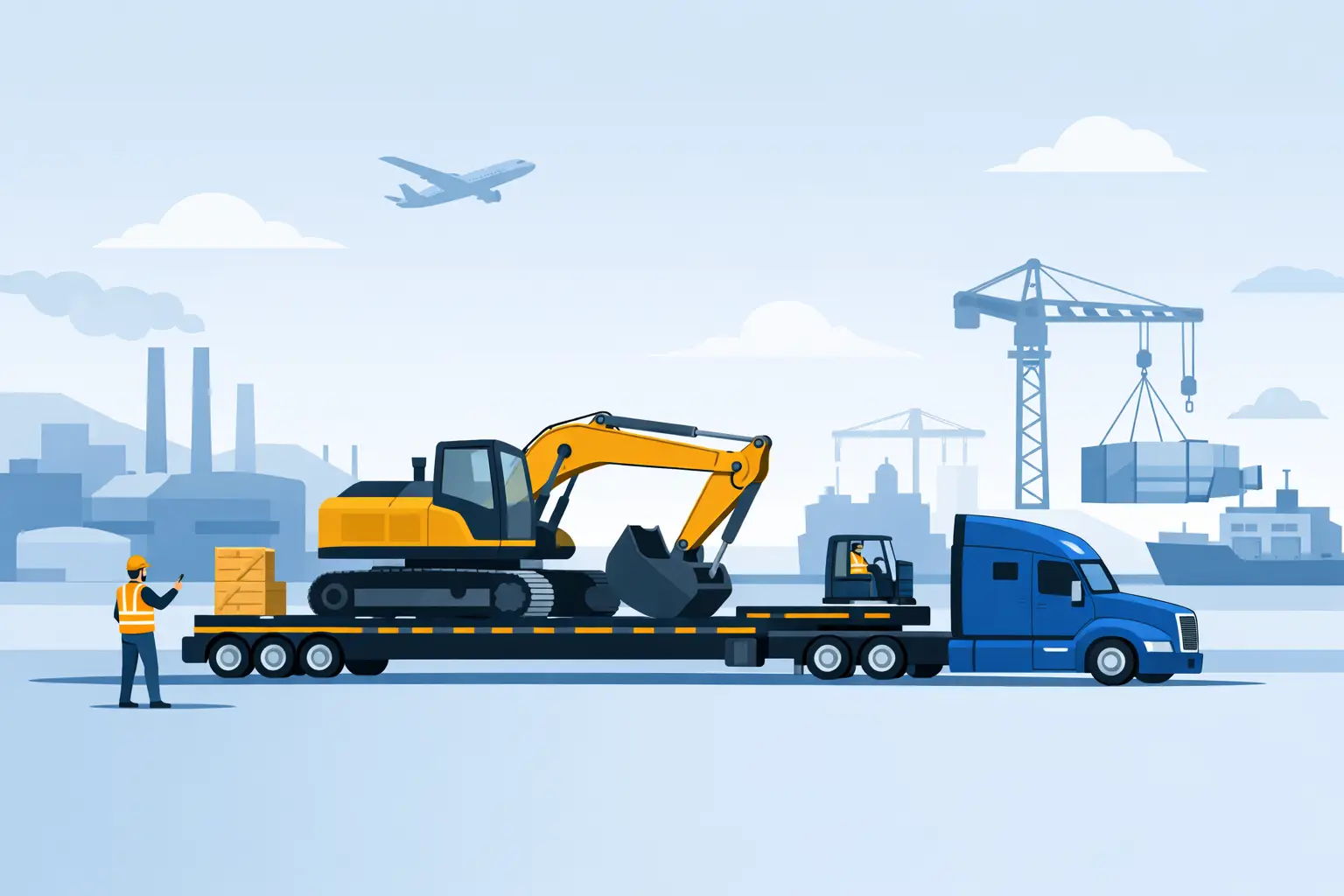
A production line does not have much patience for delays. When a machine has to move from one building, one plant, or one state to another, every hour matters. Industrial equipment transport is not just about loading a heavy item onto a truck. It is about protecting expensive machinery, avoiding downtime, coordinating access, and making sure the equipment arrives ready for the next phase of work.
For manufacturers, warehouses, contractors, and facility managers, that usually means working with a mover that can handle more than basic freight. Heavy machines, oversized components, crated systems, shop equipment, and specialty items all come with different handling needs. The right team plans around weight, dimensions, site conditions, timing, and risk instead of treating every move the same.
What industrial equipment transport really involves
Industrial equipment transport sits somewhere between commercial moving and specialized heavy hauling. Some jobs are straightforward, like relocating a single band saw, compressor, or palletized piece of equipment from one facility to another. Others involve staged loading, disassembly, protection for delicate components, storage between sites, and precise delivery windows that line up with contractors or plant operations.
That difference matters because the wrong approach can get expensive fast. A machine might be heavy, but that does not always mean it is hard to move. In some cases, the real challenge is sensitivity. Electrical panels, calibration points, exposed controls, and custom parts can be more vulnerable than the frame itself. On another job, the equipment may be durable enough to travel well, but the pickup or drop-off site creates the problem with narrow doors, uneven ground, limited dock access, or active work zones.
This is why experienced movers start with questions, not assumptions. They want to know what the equipment is, where it is going, how access works, whether it needs to be broken down, and what the schedule can realistically support. That planning stage is what separates a controlled move from a stressful one.
Why planning matters before industrial equipment transport begins
Heavy equipment moves tend to go wrong before loading ever starts. If the dimensions are off, if the route inside the building is tighter than expected, or if the destination is not ready, the whole schedule can shift. That is frustrating for any customer, but for industrial clients it can affect labor, production, and contractor timelines.
A dependable mover will account for practical details early. That includes entrance widths, stair or ramp conditions, floor protection, loading equipment, truck size, tie-down strategy, and whether temporary storage is needed. If a machine is being moved during a shutdown window or around active operations, timing also has to be tight. There is not much room for guesswork when crews, electricians, or installers are waiting.
It also helps to think through what happens on both ends of the move. Pickup may be easy because a machine is already disconnected and accessible. Delivery can be harder if the new space is still being finished or if the layout requires careful placement. In that situation, a full-service company can save time by coordinating transport with storage, hauling, and flexible scheduling rather than forcing the customer to juggle multiple vendors.
Common equipment that needs specialized handling
Industrial equipment transport can cover a wide range of items. Some customers need a single heavy machine moved across town. Others are relocating part of an operation and need multiple pieces handled in sequence.
The most common jobs include manufacturing equipment, shop machinery, warehouse equipment, large tool cabinets, industrial shelving, compressors, generators, fabrication equipment, crated parts, safes, and other oversized or high-value items. There are also gray-area jobs that are not traditional industrial freight but still require the same level of care, such as heavy lab equipment, commercial kitchen machinery, and large maintenance equipment.
Not every item needs the same service level. A palletized unit may be ready for transport with minimal prep. A machine with exposed moving parts or fragile controls may need wrapping, crating, bracing, or partial disassembly. That is where experience matters. Overhandling can waste time and money, but underprotecting equipment is the bigger risk.
The biggest risks during a heavy equipment move
Most business owners already understand the obvious risk of damage. What they sometimes underestimate is the cost of delay. If equipment arrives late, arrives inaccessible, or cannot be positioned as planned, the ripple effect can be larger than the repair bill.
There is also the issue of safety. Industrial items are often dense, awkward, and hard to stabilize if they are not loaded correctly. Weight distribution matters. Securement matters. The condition of the truck, the ramp, and the path of travel all matter. A crew that regularly handles heavy-item transport is far better equipped than a general labor team trying to figure it out on the spot.
Then there is communication. A move can be technically possible and still become a headache if timing is unclear, site contacts are missing, or last-minute changes are not addressed quickly. Business customers usually need straightforward answers, accurate scheduling, and a team that shows up prepared. That reliability is just as important as muscle.
What to look for in an industrial equipment transport provider
If you are hiring for industrial equipment transport, the safest choice is usually a company that offers broad service capability, not just truck space. Transportation is only one piece of the job. You may also need packing materials, heavy-item handling, short-term storage, junk removal from the old site, or rental solutions that help keep the project moving.
Look for a provider that asks detailed questions and explains the process clearly. A good team should be able to talk through loading, protection, scheduling, access issues, and any limits before move day. You also want a company with a track record of careful handling. Five-star-rated service matters for residential customers, but it matters just as much for a business trusting someone with expensive equipment and a tight timeline.
Availability is another practical factor. Industrial projects do not always fit into a standard weekday schedule. Sometimes a machine move has to happen after hours, on a weekend, or in coordination with a shutdown. Working with a mover that operates seven days a week can make scheduling much easier.
When storage and hauling make the move easier
A lot of industrial moves are not direct point-to-point jobs. Equipment may need to leave one site before the next site is ready. A tenant may be clearing a leased space and deciding what to keep, store, or discard. A plant may be reconfiguring floor space in phases instead of moving everything at once.
That is where bundled services become valuable. If your mover can transport equipment, provide storage, handle oversized items, and remove unwanted materials, the entire project gets simpler. You spend less time coordinating separate vendors, and there are fewer handoffs where mistakes can happen.
For Toledo-area businesses and customers moving equipment beyond Ohio, that kind of flexibility can make a real difference. A locally owned and operated company with full-service moving, hauling, storage, and trucking can adapt to the actual job rather than forcing the job into a narrow service box. That is one reason many customers trust Newcomer Movers for complex relocations involving heavy and specialty items.
Preparing your equipment for transport
Even with an experienced crew, the customer side of preparation still matters. Machines should be identified clearly, disconnected by the appropriate personnel, and emptied of loose materials when necessary. If there are operating instructions, lift points, or handling restrictions, sharing that information in advance can prevent delays and damage.
It is also smart to confirm who is responsible for reinstallation, positioning, and any specialty disconnect or reconnect work. Some moves are purely transport jobs. Others overlap with contractors, maintenance teams, or facility managers. The clearer those roles are, the smoother the project tends to go.
Photos, measurements, and site notes are also useful, especially when access is tight or there are multiple stops involved. The more your mover knows ahead of time, the more accurate the plan will be.
Industrial equipment transport is never one-size-fits-all
Some jobs need speed. Others need extra protection. Some are budget-sensitive and can be handled with straightforward loading and transport. Others justify a more careful, staged approach because the value of the equipment or the cost of downtime is too high to cut corners.
That is why the best industrial equipment transport plans are built around the actual equipment, the site conditions, and the customer timeline. A dependable mover will tell you when a job is simple and when it is not. They will also help you avoid paying for more service than you need while still protecting what matters.
If you are planning a heavy equipment move, the goal is not just getting the item from point A to point B. It is keeping your schedule, your people, and your operation in a better position when the truck pulls away.