How to Move a Piano Without Costly Damage
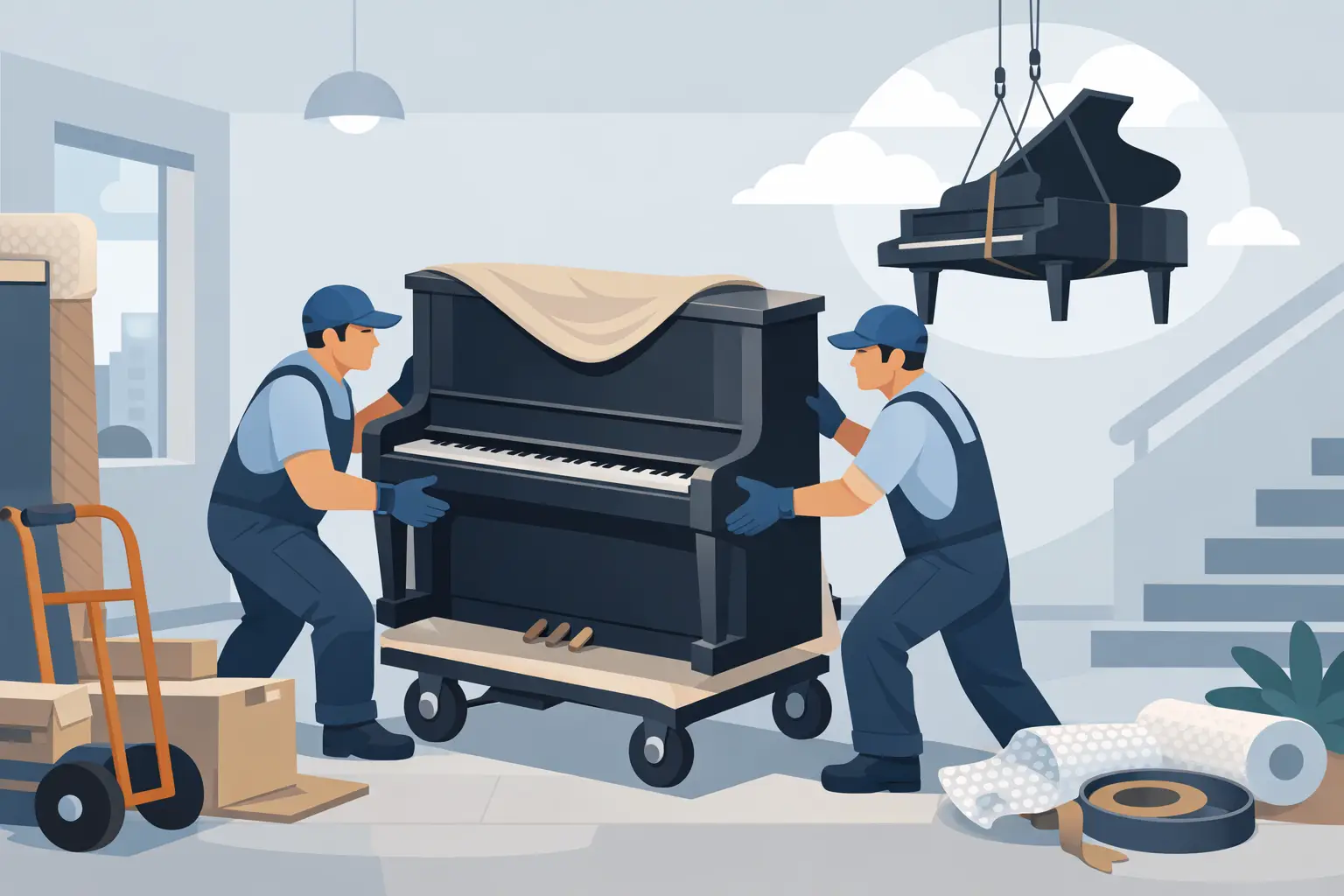
A piano can weigh anywhere from a few hundred pounds to well over half a ton, and it does not move like a couch, dresser, or dining table. If you are figuring out how to move a piano, the biggest mistake is treating it like just another large item. Pianos are heavy, awkward, delicate, and expensive to repair. One wrong angle can damage the legs, the pedals, the keys, the finish, your flooring, or your back.
That is why piano moving needs a plan before anyone lifts a finger. The size of the piano, the route out of the home, the number of movers, and the right equipment all matter. In some cases, a careful do-it-yourself move is possible. In many others, the safer and more affordable choice is hiring professionals before a simple move turns into a repair bill or an injury.
How to move a piano safely starts with the type of piano
Not all pianos create the same moving challenges. An upright piano is usually more compact, but it is still top-heavy and very dense for its size. Console, studio, and full upright models may look manageable at first glance, but they can still weigh several hundred pounds.
Grand and baby grand pianos are a different job entirely. Their shape makes them harder to balance, and their legs and pedal lyre are especially vulnerable during transport. These pieces usually need partial disassembly, careful wrapping, and stronger equipment than most homeowners have on hand.
Before you make any moving plan, confirm the piano type, approximate weight, and measurements. You also need to measure doorways, hallways, stairwells, turns, and the truck opening. If the path is tight, uneven, or includes stairs, that changes the risk right away.
What you need before moving day
Trying to move a piano without proper equipment is where most problems start. A few strong friends are not a substitute for preparation. At minimum, you need heavy-duty moving blankets, secure wrap or tape, a piano board or skid for some models, a quality dolly rated for the load, lifting straps, and a truck with a ramp or liftgate. Work gloves with grip also help, but they do not make the item safer to handle on their own.
You also need enough people. For a smaller upright on a simple, single-level move, you may still need at least three or four adults who can follow directions and move in sync. For a large upright, baby grand, or any staircase move, the labor and experience requirements go up fast.
This is where many people underestimate the job. The challenge is not only lifting the weight. It is controlling the weight through narrow spaces, over thresholds, and into or out of the truck without sudden shifts.
Preparing the piano and the home
Before moving, close and lock the keyboard lid if the piano has a lock. If it does not, secure it gently so it cannot swing open. Wrap the piano in thick moving blankets to protect the finish, corners, and edges. Tape should hold the blankets in place, but it should never touch the piano’s surface directly.
Clear the route completely. Remove rugs, floor clutter, wall decor, and anything else that can create a trip hazard. Prop doors open when possible. If you are protecting hardwood, tile, or entry thresholds, lay down floor protection before the move begins.
Small details matter here. A single loose rug or a tight turn near a stair rail can change a controlled move into a scramble. Good preparation gives the movers room to work slowly and steadily.
How to move an upright piano
An upright piano usually stays in its normal standing position during the move. It should be wrapped fully, then carefully lifted onto a heavy-duty dolly. The goal is controlled movement, not speed. Keep the piano balanced and move one small section of the route at a time.
When passing through doorways or around corners, communicate clearly and avoid twisting the piano suddenly. If the piano needs to cross a threshold or slight step, pause and reset your grip instead of trying to bump it over. Once outside, use a ramp or liftgate to get it into the truck. Inside the truck, strap it securely against a solid wall so it cannot roll or tip during transit.
If stairs are involved, the difficulty increases significantly. Even a short set of porch steps can be dangerous because of the weight concentration. That is often the point where professional piano movers make more sense than a DIY attempt.
How to move a grand or baby grand piano
A grand piano usually cannot be moved the same way as an upright. The lid must be secured, and in many cases the legs and pedal assembly need to be removed carefully before transport. Once prepared, the body is often placed on a piano board and padded thoroughly for support and protection.
This is precision work. The piano must be lowered in a controlled way to avoid stress on the frame and case. The removed parts need to be wrapped and labeled so they are not damaged or misplaced. Loading also takes more care because the shape of the instrument makes shifting more likely if it is not braced properly.
For most homeowners, this is the point where the answer to how to move a piano becomes simple: do not risk a grand piano move without trained help. The cost of damage to the instrument usually outweighs any savings from doing it yourself.
Common mistakes that cause damage
The most common piano moving mistake is underestimating the weight and assuming enough manpower will solve the problem. It usually does not. Strength helps, but technique, equipment, and route planning matter more.
Another mistake is lifting by the legs, pedals, or decorative sections. Those parts are not reliable lifting points. Damage to legs or casters can make the piano unstable, and finish damage can be costly to repair.
Poor truck loading is another issue. If the piano is not strapped tightly and positioned correctly, road vibration and shifting can cause both cosmetic and structural damage. Temperature and humidity changes can also affect the instrument, especially on longer moves or storage stays.
When hiring piano movers is the smarter move
There is a difference between something being possible and something being worth the risk. If your piano is especially valuable, if the move includes stairs, if the route is tight, or if the piano is a grand, bringing in professionals is usually the better call.
Experienced movers know how to protect the instrument, the home, and the people involved. They come with the right equipment, trained crews, and practical experience handling oversized items. That can save time, prevent injury, and reduce the chance of damage that costs far more than the moving service itself.
For families, seniors, business owners, and anyone already juggling a stressful move, this kind of specialty service can also remove a major headache. A full-service company that handles moving, storage, packing, and heavy-item transport gives you one point of contact instead of several.
What to ask before choosing a piano moving company
If you are hiring help, ask direct questions. Do they have experience moving upright and grand pianos? Do they bring piano-specific equipment? Have they handled stairs, tight spaces, and long-distance transport? Are they insured for specialty items?
You should also ask how they protect flooring, truck-load the piano, and handle temporary storage if your move has a gap between locations. A dependable company should answer clearly and confidently, not vaguely.
For customers in Toledo and beyond, working with a 5-star-rated, locally owned and operated company that has handled specialty moves since 2007 can make a real difference. Newcomer Movers understands that heavy-item moving is about more than muscle. It is about care, planning, and treating valuable items like they matter.
After the piano is moved
Once the piano is in its new location, do not rush to play it right away if it has been exposed to major temperature or humidity changes. Let it settle into the room first. It is also normal for a piano to need tuning after a move, especially after long-distance transport or seasonal weather changes.
Choose a stable location away from direct sunlight, exterior drafts, heating vents, and excess moisture. Placement affects both sound and long-term condition. A careful move protects the piano for the trip, but the right setup helps protect it for years.
A piano is one of the few household items that can be physically heavy and mechanically delicate at the same time. If your move is simple and you have the equipment, labor, and experience, a careful local move may be manageable. If not, there is no shame in bringing in movers who do this work every day. The smartest move is the one that gets your piano to its next home safely.